Dead Coils and Dropped Fish: What Your Reel's Line Memory Is Actually Costing You
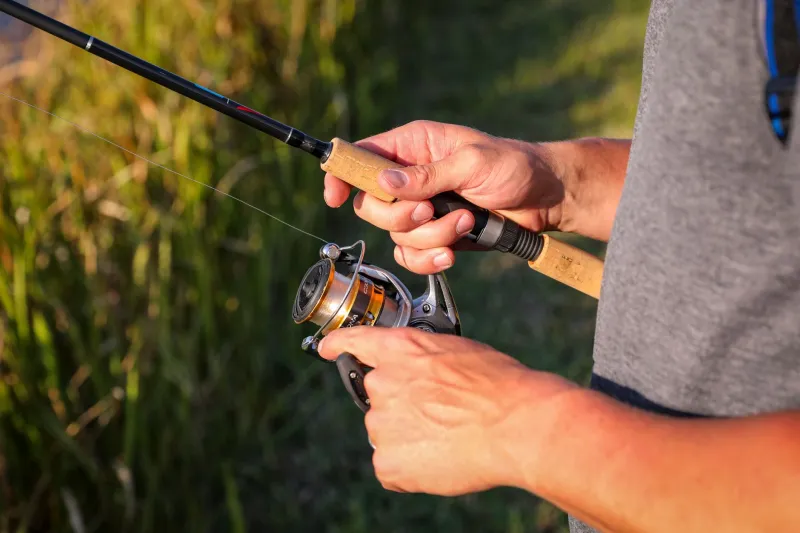
You've done everything right. You've scouted the spot, matched the hatch, made a clean cast — and then your line comes off the spool in a loose, coiled mess that kills your presentation before the lure even hits the water. Sound familiar? That's line memory at work, and it's one of the most overlooked performance killers in recreational fishing.
Most anglers think about line memory the same way they think about tire pressure — they know it matters, but they don't check it until something goes obviously wrong. The problem is that by the time you notice the symptoms, you've probably already lost fish.
What Line Memory Actually Is (And Why It Happens)
Line memory refers to the tendency of fishing line to retain the shape of whatever it's been wrapped around — in this case, your spool. Every time line sits coiled under tension, it develops a "set," especially in colder temperatures or after extended storage. When you cast, instead of shooting off the spool in a smooth arc, it springs off in tight loops that create drag, reduce distance, and throw off your accuracy.
The physics are straightforward: monofilament and fluorocarbon lines are made from nylon or polymer-based materials that behave almost like a soft plastic under sustained compression. They deform slowly over time. Braided lines, by contrast, have much lower memory because their woven construction distributes stress differently — but they're not entirely immune, especially when spooled too loosely or left on a reel for multiple seasons.
Temperature plays a huge role here. If you're fishing the northern states — think the Great Lakes region, the Upper Midwest, or anywhere you're pulling gear out of a cold garage in early spring — your line has been sitting in a compressed, cold state for months. That monofilament you spooled up in October? It's been developing memory since Thanksgiving.
The Signs You're Already Behind the Curve
You don't need a lab to diagnose line memory. Here's what to watch for:
Coiling off the spool. Pull a few feet of line off your reel and let it hang. If it forms visible loops or spirals instead of falling relatively straight, you've got significant memory buildup. A healthy line should have minimal curl.
Shorter casting distance. This one's subtle but real. Memory creates micro-friction as the line leaves the spool, especially on spinning reels where the line peels off the front of the spool in loops. Those little coils catch air, slow the line down, and rob you of 10 to 20 feet of distance — sometimes more.
Missed hook sets. This is the one that stings. When a fish strikes and you set the hook, any slack or spring in your line absorbs energy before it reaches the hook. Heavily memorized line can actually cushion a hook set enough to let a fish shake free, particularly on longer casts where the line stretch compounds the problem.
Tangles and wind knots. If you're regularly picking out wind knots on a spinning setup in calm conditions, memory is almost always a contributing factor. The coils coming off the spool don't lay flat — they overlap and bind.
Reel Type Matters More Than Most Anglers Realize
Different reel designs interact with line memory in different ways, and understanding that can help you make smarter gear decisions.
Spinning reels are the most vulnerable to memory-related problems because of how line peels off the spool. The line has to come off in a spiral, and any coil memory amplifies that spiral into a tangled mess. If you're running monofilament on a spinning reel, you should be changing it more often than you think — at minimum once a season for regular use, more if you're fishing frequently.
Baitcasting reels handle memory somewhat better because the spool rotates as line pays out, which means the line comes off in a more controlled manner. That said, memory still affects casting distance and can contribute to backlash if the line springs off the spool faster than the spool can rotate. Fluorocarbon on a baitcaster in cold weather is a particularly notorious combination for this reason.
Spincast reels — the push-button style that a lot of anglers start on — are probably the least affected in terms of casting mechanics, but the enclosed design means anglers rarely inspect or replace line until something breaks. Out of sight, out of mind, and that's a problem.
The Seasonal Maintenance Protocol That Keeps Tournament Anglers Sharp
Competitive anglers don't wait until they notice a problem. They build line management into their seasonal prep the same way they tune their rod guides or service their reel bearings. Here's a practical version of that protocol adapted for recreational anglers:
Pre-season respool (Late Winter/Early Spring). Before your first trip of the year, strip and replace your primary lines — especially any monofilament or fluorocarbon that's been sitting since fall. This is non-negotiable if you store gear in an unheated space. New line is cheap. Lost fish aren't.
Mid-season flip (Midsummer). If you're fishing two or three times a week through the summer, your line is taking a beating from UV exposure, heat, and repeated casting. Around the Fourth of July is a good mental checkpoint to inspect your line. Pull off 20 feet and test it for coiling and stiffness. If it's showing memory or feels brittle, swap it out.
The stretch trick. Before heading out for a day of fishing — especially in cold weather — strip out 30 to 40 feet of line and run it through your fingers with light tension a few times. This physically stretches and relaxes the coils, temporarily reducing memory and improving your first few casts of the day. It's not a substitute for fresh line, but it helps.
Spool tension check. When respooling, make sure you're applying consistent, moderate tension as the line goes on. Line spooled too loosely will embed itself in lower layers under fishing pressure, creating uneven tension and accelerating memory development.
Choosing Line to Fight Memory at the Source
Not all lines are created equal when it comes to memory resistance. If you're consistently frustrated by coiling, it might be time to reassess what you're spooling up.
Braided line remains the gold standard for low memory. It casts farther, stays more consistent across temperatures, and doesn't suffer the same polymer fatigue that mono and fluoro do. The tradeoffs — higher visibility and less stretch — are real, but for many applications a braid-to-leader setup gets you the best of both worlds.
Within the monofilament category, softer, more supple formulations (often marketed as "low memory" mono) genuinely do perform better in cold conditions than stiffer, budget options. It's worth paying a few extra dollars per spool for a quality line if memory has been a recurring issue for you.
Fluorocarbon has notoriously higher memory than mono at equivalent pound tests, but its near-invisibility underwater makes it a favorite for leader material and clear-water applications. If you're running straight fluoro on a spinning reel, be especially diligent about seasonal replacement and the stretch trick mentioned above.
The Bottom Line
Line memory isn't glamorous. It doesn't make for great dock talk, and nobody's going to write a viral post about respooling their spinning reel. But the anglers who treat line management as a discipline — not an afterthought — consistently out-fish the ones who don't. Your reel can be the most expensive one on the water, and it won't matter if the line coming off it is fighting you on every cast.
Swap it out. Fish smarter. The fish you're after have enough advantages already.