Boat, Bank, or Waders: We Did the Math So You Don't Have to

Photo: angler wade fishing in river with fly rod mountain stream, via www.the-sun.com
Here's a conversation that happens in tackle shops across America about a thousand times a year: a newer angler, frustrated with results from the bank, asks whether buying a boat would fix their fishing. The guy behind the counter — who's been fishing since before you were born — pauses, scratches his chin, and says something like, "Depends."
That's not a dodge. It's actually the correct answer. And it's the one this article is going to unpack properly.
Boats, bank fishing, and wade fishing are three genuinely different sports that happen to use the same tackle. Each has a real cost profile, a distinct learning curve, and a set of conditions where it absolutely dominates — and conditions where it falls flat. Let's get into it.
The Boat: Power, Reach, and a Payment You Didn't Fully Account For
What It Actually Costs
A functional used bass boat — something you'd be proud to fish from, not embarrassed by — runs between $8,000 and $20,000 in today's market. Add a trailer, registration, insurance, and a trolling motor if it doesn't come with one, and you're realistically at $12,000–$25,000 before you've made a single cast.
Annual carrying costs pile on fast: storage ($600–$1,800/year depending on your region), fuel (a 150hp outboard drinks gas at roughly 6–8 gallons per hour at cruise), maintenance, and the occasional unexpected repair. Many boat owners who've actually run the numbers land somewhere between $2,500 and $5,000 per year in operating costs, not counting the initial purchase.
New anglers sometimes look at entry-level jon boats or kayaks as a middle ground. A decent fishing kayak with a paddle, life jacket, and basic anchor system runs $800–$1,500 and has nearly none of the ongoing cost overhead of a motorized boat. For rivers, small lakes, and backwater areas, a kayak is one of the most underrated tools in freshwater fishing.
What a Boat Actually Gets You
Coverage. That's the honest answer. A boat lets you cover water that bank anglers and waders simply can't reach — mid-lake structure, offshore humps, main-lake points during summer drawdowns, and the ability to follow fish as they move through the season.
For tournament-style bass fishing, walleye trolling on big water, or chasing stripers on large reservoirs, a boat isn't optional. It's the price of admission.
But here's what boat owners don't always tell you: owning a boat doesn't automatically make you a better angler. It just gives you more water to be mediocre on. The learning curve for reading electronics, running waypoints, managing drift in wind, and anchoring effectively on structure is real and takes time. Plenty of bank anglers consistently out-fish boat owners on the same body of water because they know their spots cold.
The Bank: Free, Flexible, and Criminally Underestimated
What It Actually Costs
A rod, a reel, a tackle box, and a license. That's it. You can build a genuinely capable bank fishing setup — a mid-grade spinning combo, a selection of plastics, some terminal tackle, and a decent tackle bag — for under $150. Even if you go all-in on quality gear, $400 gets you a bank fishing kit that will outperform most of the people you'll encounter on public piers and shorelines.
No storage fees. No fuel. No trailer tires blowing out on the highway. No winterization bill.
What Bank Fishing Actually Gets You
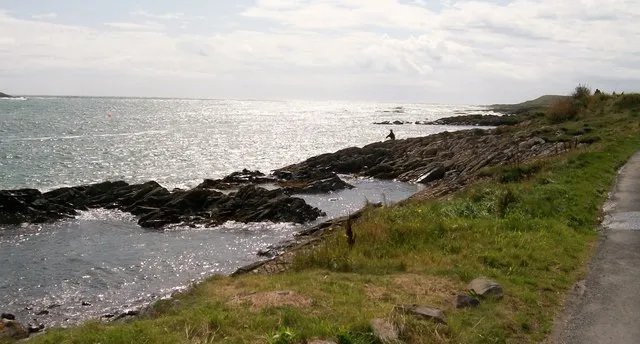
Access to an enormous amount of water that most boat anglers ignore entirely. Public fishing areas, urban ponds, tailwaters below dams, jetties, piers, surf zones, and the banks of virtually every river in the country are all fair game with nothing more than a rod and a license.
The limitation is obvious: you can only fish what you can reach from where you're standing. But that limitation pushes bank anglers to develop a deeper understanding of their specific spots. The best bank fishermen we've talked to know their stretches of water the way a farmer knows a field — every log, every current seam, every depth change within casting range. That intimacy produces consistent results.
For urban anglers, beginners, and anyone fishing with kids, bank fishing is almost always the right call. The barrier to entry is near zero, the experience is immediate, and the learning is fast.
Wade Fishing: The Tactician's Game
What It Actually Costs
A pair of chest waders ($80–$350 depending on material and quality), wading boots ($60–$150), a wading belt (non-negotiable for safety, around $20–$40), and a wading staff if you're dealing with heavy current ($40–$80). Call it $200–$600 to get properly set up.
Quality waders are worth the investment. Cheap neoprene will have you sweating in September and leaking by the second season. Mid-range breathable waders from reputable brands are the sweet spot for most anglers.
What Wade Fishing Actually Gets You
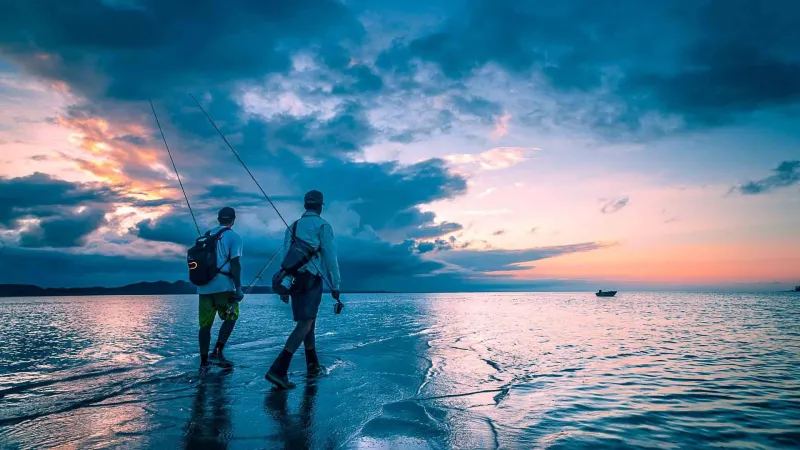
Precision and stealth. Wade fishing — particularly in rivers and streams for trout, smallmouth bass, and redfish in coastal flats — lets you position yourself exactly where you need to be. You're not fighting wind drift, you're not dealing with anchor noise, and you're not stuck casting from a fixed elevation. You move with the water.
For fly fishing, it's essentially the default method. But wade fishing with conventional gear on smallmouth rivers, trout streams, and shallow saltwater flats is incredibly productive and deeply underutilized by the average angler.
The physical demands are real. Wading in current is tiring, and wet wading in cold water without proper gear is genuinely dangerous. But the access it provides — getting behind a mid-river boulder, wading into position on a tidal flat at low tide, crossing to the far bank where nobody else bothers to go — consistently puts experienced waders in front of fish that boat anglers motor right past.
So Which One Wins?
That depends on what you're actually asking.
If you're chasing numbers on big water and want to fish tournaments, you need a boat. If you're fishing urban areas, keeping costs low, or just starting out, bank fishing is the single best value in the sport. If you're a precision-oriented angler who loves rivers, streams, or shallow saltwater flats, waders open up a world that neither a boat nor the bank can touch.
The anglers who seem to catch fish no matter where they go tend to be comfortable with all three. They own a solid pair of waders, keep a bank rod in the truck, and rent or borrow a boat when the water calls for it. They spend money on knowledge — maps, fishing reports, local guides — rather than assuming that gear upgrades will fix fundamental problems.
The best fishing tool you own is still the one between your ears. Everything else is just how you get to the water.