Fast Water, Slow Down: Why Rivers and Runs Are Eating Your Lure Presentation Alive
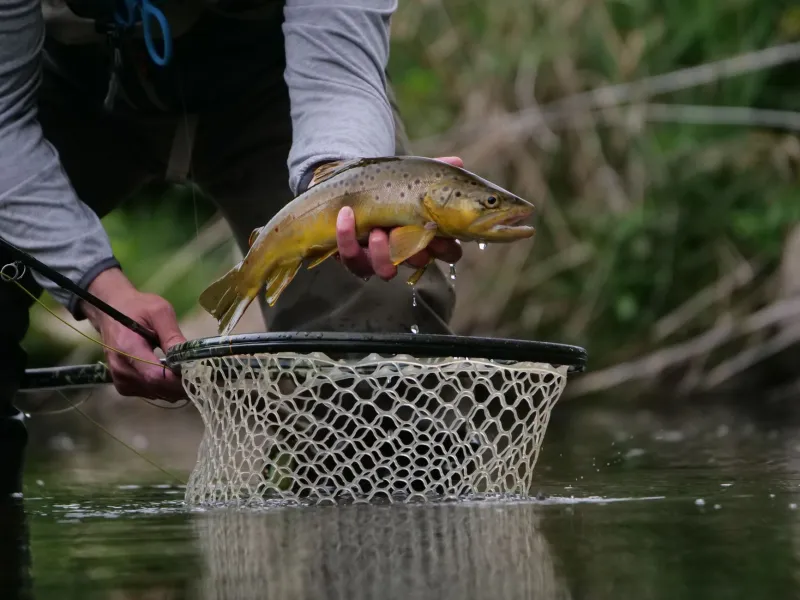
There's a trap that catches almost every angler who steps into moving water for the first time — and plenty of experienced ones too. The trap is simple: fast water feels active, so you fish it actively. The current is moving, the riffles are churning, the whole river looks alive. So you match that energy. You cast, retrieve fast, cover water, and keep moving.
And you leave fish behind by the dozen.
Fast water fishing has a counterintuitive core truth buried inside it, and once you understand it, you'll never approach a run, riffle, or tailrace the same way again. The fish are there. The feeding opportunities are real. But the window is tighter than you think, and the way most anglers work through it is almost perfectly designed to miss it.
What Current Actually Does to a Fish
Let's start with biology, because it explains everything.
Fish are cold-blooded. Their metabolism is directly tied to water temperature. In cold water — think early spring runoff, late fall tailwaters, high-elevation streams in summer — a fish's metabolic rate drops significantly. That means they're not burning energy the way you might imagine. They're not chasing. They're not sprinting after fast-moving targets. They're conserving.
Here's where it gets interesting: fast water and cold water often go together. Runoff, tailraces below dams, freestone streams — these environments can be moving at a serious clip while sitting at temperatures that slow fish metabolism to a crawl. A trout holding in a seam behind a boulder in 48-degree water isn't going to burn 200 calories chasing a streamer you're stripping like you're late for a meeting.
The energy equation has to make sense for the fish. If your presentation requires more effort to eat than it delivers in calories, the fish passes. Every time.
The Seam Is the Point — Not the Fast Water Itself
One of the biggest misconceptions about fishing fast water is thinking you're fishing the current. You're not. You're fishing the edges of it.
Seams — those transition lines where fast water meets slower water — are where fish actually live in moving environments. They sit in the slower water, nose pointed upstream, and let the current deliver food to them. They're expending minimal energy while intercepting maximum calories. It's a brilliant system, and your presentation has to work with it.
That means your lure or fly needs to enter the fast water, behave naturally, and then slow down or pause right at that seam edge. If you're retrieving too fast, you're pulling the presentation out of that strike zone before a cold, slow-metabolizing fish has time to commit. You're essentially yanking the menu away before they've finished reading it.
Learn to read current breaks, boulder shadows, undercut banks, and depth changes. Those are the actual targets. The fast water between them is just the delivery system.
Lure Selection Changes Completely in Current
What works in a still pond or a slow backwater often fails completely in moving water — not because the fish don't eat those things, but because the current changes how your presentation behaves.
Heavier jigs that would drag bottom in flat water suddenly hold position beautifully in a fast run. Soft plastics that swim erratically in still water take on a completely different, more natural action when the current does the work for you. Spinners that seem overdone in a quiet lake become perfect current-mimicking baitfish imitations in a riffle.
The key principle: let the water do the work. Presentations that require active, fast retrieves fight the current. Presentations that work with the current — that dead-drift, swing naturally, or hold in the strike zone with minimal angler input — are almost always more effective.
For lure fishermen, this often means going heavier than feels intuitive. A heavier head gets down faster, holds the seam longer, and gives slow-metabolizing fish the time they need to decide. For fly anglers, it means mastering the dead drift and resisting the urge to mend constantly out of habit rather than necessity.
Timing Matters More in Moving Water Than Almost Anywhere Else
Temperature doesn't just affect how fish feed — it affects when they feed. In fast water environments, the feeding window can be surprisingly narrow, and missing it by a couple of hours means fishing through dead time with perfect technique and getting nothing for it.
In cold-water fast fisheries, the best feeding windows typically align with the warmest part of the day, when water temperatures climb just enough to tick fish metabolism up a notch. On a cold spring morning, trout in a freestone stream might be almost completely inactive at 7 a.m. but feeding aggressively by noon when surface temps have risen a few degrees.
Conversely, in summer when fast water is warmer, fish often push their activity into early morning and evening to avoid metabolic stress from heat. The fast water that looked dead at 2 p.m. in July can be absolutely on fire at dawn.
Paying attention to water temperature — not just air temperature — is one of the highest-leverage habits you can develop as a moving-water angler. A basic stream thermometer costs less than a pack of hooks and will change how you read every day on the water.
The Rush-Through Mistake
Here's the real patience tax: most anglers who fish fast water treat it like they're covering ground in a race. They work through a run in ten minutes, decide it's unproductive, and move to the next one. Then the next. Then the next.
But the angler who slows down, reads the seams carefully, works each one with multiple presentations at different depths and speeds, and actually waits for the fish to respond — that angler consistently outperforms everyone else on the same stretch of water.
Fast water rewards patience in a way that feels almost unfair once you understand it. The fish aren't moving much. They're holding. They're waiting for food to come to them. Your job isn't to cover water. Your job is to find where they're holding and put something in front of them long enough, naturally enough, that eating it makes energetic sense.
That might mean ten casts to the same seam at slightly different angles. It might mean switching from a fast retrieve to a dead-drift and watching the line instead of feeling for a bite. It might mean waiting out a cold morning instead of hammering unproductive water for three hours.
Work Smarter, Not Faster
Fast water is some of the most productive fishing you'll ever find — if you respect what it's actually asking of you. The current does the work. The seams hold the fish. The temperature tells you when to be there. Your presentation just has to make the energy math work in your favor.
Slow down. Go heavier. Read the edges. Check your water temp. And the next time you're standing in a run that looks like it should be full of fish, resist the urge to blow through it. The patience tax is real — and the anglers paying it are the ones walking away empty-handed.