Off the Radar: Walleye Hotspots Across the Great Lakes Region That Most Anglers Walk Right Past
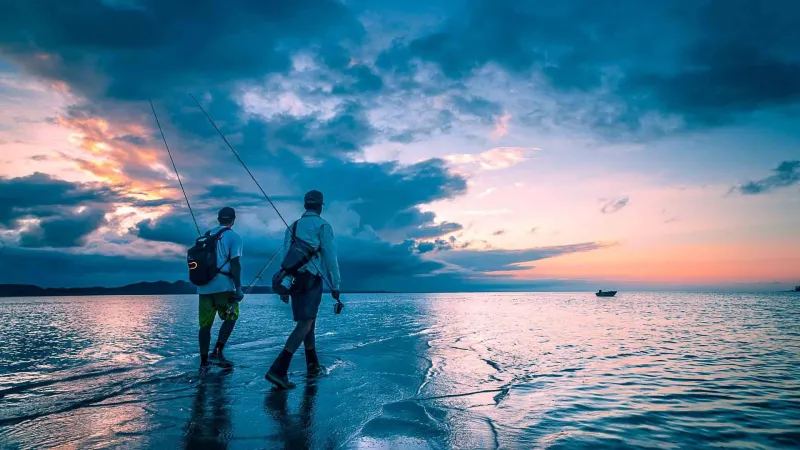
Photo: walleye fishing Great Lakes trophy catch sunrise boat, via wallpapers.com
Let's be honest — everybody knows Mille Lacs. Everybody's heard about Green Bay. And sure, those places earn their reputations. But if you've spent any real time chasing walleye across Michigan, Wisconsin, and Minnesota, you already know the crowds can kill the bite just as fast as a cold front. The fish are still out there. You just have to know where to look.
We spent the better part of a season reaching out to regional fishing guides, tournament veterans, and the kind of local bait shop owners who've been watching the same water for thirty years. What came back was a collection of spots, strategies, and timing tips that don't show up in the glossy fishing magazines. Some of these guys were reluctant to talk. A few asked us not to use their names. That alone should tell you something.
Why the "Famous" Spots Aren't Always Your Best Bet
Here's the thing about heavily publicized walleye destinations: pressure changes fish behavior. Walleye are already notoriously finicky — low-light feeders with excellent vision and a tendency to go lockjaw the moment conditions shift even slightly. Add a fleet of boats running the same presentations over the same structure day after day, and those fish get educated fast.
The overlooked spots we're talking about don't necessarily hold more fish. But the ones they do hold are less pressured, more willing to commit to a bait, and often — based on what the guides told us — running bigger on average. Tournament anglers have known this for years. They scout new water constantly, always looking for an edge. You should be doing the same.
Michigan's Upper Peninsula: The Forgotten Walleye Country
Most walleye attention in Michigan gravitates toward the Saginaw Bay area or the Detroit River corridor. Both are legitimate fisheries, no argument there. But the Upper Peninsula is quietly holding its own.
Curt, a guide operating out of Escanaba who asked us not to publish his last name, pointed us toward the northern stretches of Lake Gogebic and several connected flowages that don't get much traffic outside of ice fishing season. "In open water, most guys don't even think about it," he told us. "They drive right past it on their way to somewhere they read about online."
The key in this region is rocky transition zones — areas where gravel or rubble bottom meets softer substrate. Walleye use these edges heavily during the post-spawn period (typically late May into early June up here) and again when water temps drop back into the low 50s in fall. Jigs tipped with live crawlers worked slowly along these transitions have been Curt's go-to for years. Sunrise and the last 90 minutes of daylight are your windows.
For GPS-minded anglers, focus your scouting on the northeastern bays of Lake Gogebic, particularly where feeder streams enter. These current seams hold baitfish and, consequently, walleye — especially during low-light periods.
Wisconsin's Inland Lakes: Looking Beyond the Famous Names
Wisconsin is loaded with walleye water, but most visiting anglers default to the Chippewa Flowage or Lac Courte Oreilles. Both solid choices. But a guide we connected with out of Hayward — 22 years in the business — made a compelling case for the smaller, less-publicized lakes scattered throughout Sawyer and Vilas counties.
"There are lakes up here with DNR survey data showing exceptional walleye populations that almost nobody fishes," he said. "Because they don't have a lodge on them or a famous name, they get skipped entirely."
His advice: pull the Wisconsin DNR's lake survey reports for any body of water you're considering. These documents, available free online, show population density, average size, and sometimes even dominant age classes. A lake with a strong 2019 or 2020 year class is now producing fish in the 18-to-22-inch range — exactly what most walleye anglers are hunting.
Timing matters enormously in Wisconsin's inland lakes. The early summer period (late June through mid-July) often sees walleye pushed into deeper basin areas during daylight, then sliding up onto adjacent flats after dark. Running spinner rigs with nightcrawlers along depth breaks in the 14-to-22-foot range after sunset has been consistently productive on these overlooked lakes.
Minnesota's Iron Range Reservoirs: A Sleeper Fishery
Minnesota rightfully calls itself the Land of 10,000 Lakes, and walleye are woven into the state's fishing identity. But even here, certain waters fly completely under the radar.
The Iron Range reservoirs — created by mining operations and later reclaimed as recreational fisheries — are among the most underappreciated walleye destinations in the state. Lakes like Embarrass Reservoir and several others in St. Louis and Itasca counties have developed surprisingly strong walleye fisheries over the past two decades, yet they rarely come up in conversation outside of local circles.
A Minnesota DNR fisheries technician we spoke with (who emphasized he was speaking informally, not officially) noted that some of these reservoirs have steep, rocky structure that's almost tailor-made for walleye. "The fish don't have as many places to spread out," he explained. "They concentrate in predictable areas, which actually makes them easier to pattern than a big natural lake."
For these waters, crankbaits trolled along steep rocky walls in the 8-to-15-foot zone are devastatingly effective from late June through September. Pay attention to wind direction — walleye in these reservoirs tend to stack on windward shorelines where current pushes baitfish into corners.
Seasonal Timing: The Variable Most Anglers Underestimate
Every guide we spoke with hammered the same point: location is only half the equation. Being in the right place at the wrong time of year is just as frustrating as fishing the wrong spot entirely.
The general walleye calendar across the Great Lakes region runs something like this:
- Spring (April–May): Post-spawn fish recovering near spawning tributaries and shallow rocky areas. Aggressive and catchable but often catch-and-release territory depending on state regulations.
- Early Summer (June–July): Fish transition to summer patterns. Deeper structure during daylight, shallower flats at night. This is trophy season on many waters.
- Late Summer (August): Toughest period. Thermoclines set up, fish go deep. Vertical jigging over basin structure or targeting river current breaks.
- Fall (September–October): One of the best windows of the year. Fish feed aggressively before winter. Shallower presentations work again, and big females are stacking on weight.
Ice fishing opens up an entirely different conversation — and honestly, some of these overlooked lakes are even more productive under the ice when competition is minimal.
How to Find Your Own Hidden Spots
The best piece of advice we got across all our conversations? Stop relying exclusively on what other people have already published.
Use your state's DNR lake survey database. Study topographic maps and look for structural irregularities — inside turns, sunken islands, creek channels — that break up otherwise featureless bottom. Talk to the guy behind the counter at the local bait shop, not the one closest to the famous lake, but the one in the small town twenty miles down the road. Buy him a coffee if you have to.
The Great Lakes region has more productive walleye water than any angler could fish in a lifetime. The secret isn't a set of GPS coordinates. It's the willingness to put in the scouting work that most people skip because they'd rather just follow the crowd.
Cast further. Fish smarter. The fish are out there waiting.